

 Hemory Team
On this page
A wearable can make it easier to capture a conversation without taking notes throughout it. But convenience does not settle whether recording is appropriate, whether the people involved understand what will be captured, or whether the device works with your setup. Use these checks before recording colleagues or friends.
TL;DR
- Explain the recording before starting and give people a clear way to decline. Check applicable local rules and workplace policies separately; requirements vary.
- Confirm support for your exact device and setup. Hemory lists iOS, Apple Watch, Android, and Wear OS. Do not assume every wearable or watch can capture independently.
- Hemory’s Schedule Mode provides a reminder and one-tap start or stop; it is not silent automatic recording. Know how you will stop capture if someone objects or the conversation changes.
- Check how audio, transcripts, and organized Memory are handled. Do not assume that information about one data type applies to the others.
1. Decide whether recording is appropriate—and explain it first
Before choosing a device, consider who will be recorded and why. A work conversation may be subject to an employer’s policies or confidentiality expectations. A private conversation with a friend can still involve sensitive personal information. If a discussion includes someone who has not agreed to be recorded, a wearable’s small size does not make recording more appropriate.
As a practical trust standard, tell participants before starting. Explain what you want to capture, how you plan to use it, and who may be able to access the resulting record. Give people a real choice, and agree on what will happen if someone wants the recording paused or stopped. If recording is not appropriate for the setting, use notes or another agreed method instead.
Consent expectations and recording rules vary by location and context. Check the rules that apply where the conversation takes place using an appropriate official source or qualified professional; workplace policies may add separate requirements. This checklist is not legal advice, and it cannot determine whether a particular recording is lawful.
2. Confirm the device and platform fit
A wearable is useful only if the recorder’s supported app and your intended setup work together. Check the current product documentation for the exact device model, operating system, app availability, permissions, and any pairing or connection requirements. Do not treat general support for a platform as proof that every model or configuration works.
Hemory lists iOS, Apple Watch, Android, and Wear OS as supported platforms. Its product information specifically describes Apple Watch as able to capture and upload listening content independently. Do not assume the same independent operation for other watches unless their current documentation says so.
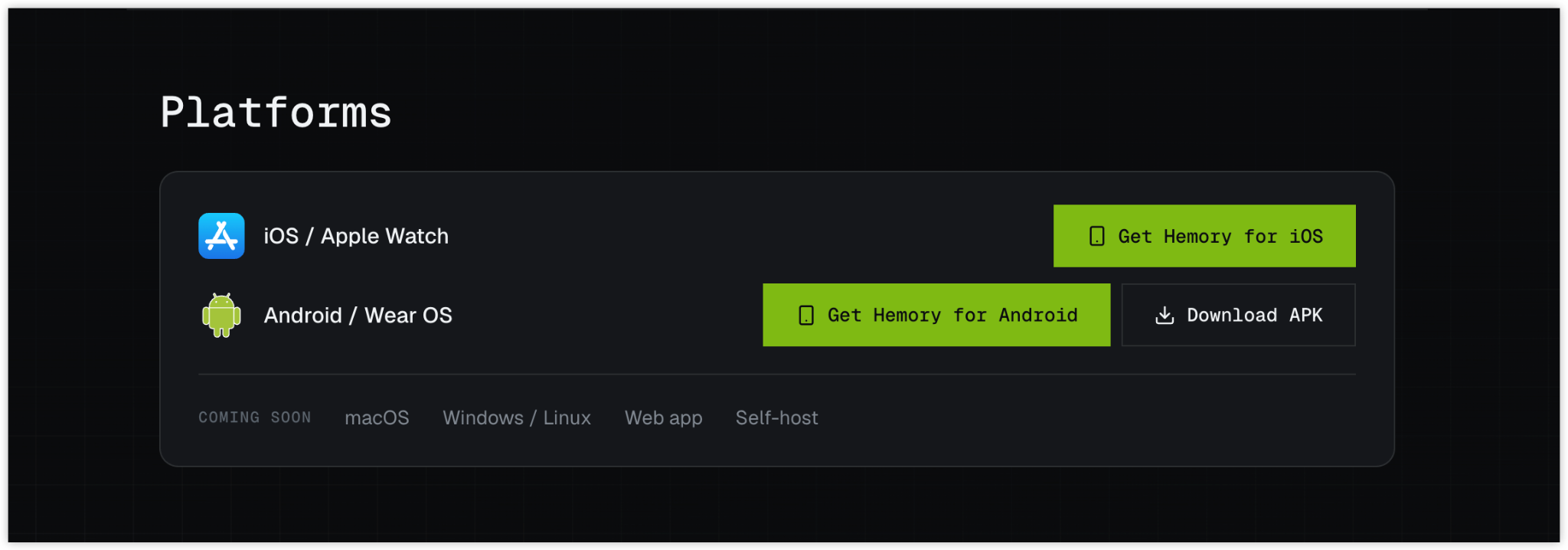
See the mobile and wearable platforms listed on the site.
Also confirm how capture begins and ends. Hemory’s Manual Mode lets the user start and stop listening. Schedule Mode provides a reminder at the scheduled time, with one-tap start and stop actions; it should not be treated as silent automatic recording. If you rely on reminders, check that their timing and controls suit the conversation and that you know how to stop listening yourself.
3. Check what is captured and how it is handled
Before recording, find out what the service creates from a session and what its current terms say about access, retention, and deletion. Check audio, transcripts, and organized records separately: information about one does not necessarily describe the others. If the recording may contain confidential work or personal details, consider whether the people involved and your organization permit that use.
Hemory describes timestamped, speaker-labeled transcripts and organized Memory from captured listening sessions. Its built-in Q&A can retrieve information across captured conversations. That can help when you later need to recover a detail without relying only on memory, but it is useful only for conversations that were captured and are accessible. A transcript or summary may also need review; do not assume it is complete or error-free.
4. Rehearse the start-and-stop plan
Before using a wearable in a real conversation, learn how to confirm that listening has started and how to stop it. If you are unsure whether the device provides a clear recording indicator, do not rely on one: tell participants directly when recording begins. Agree on a simple way to pause if the subject changes or someone asks to stop.
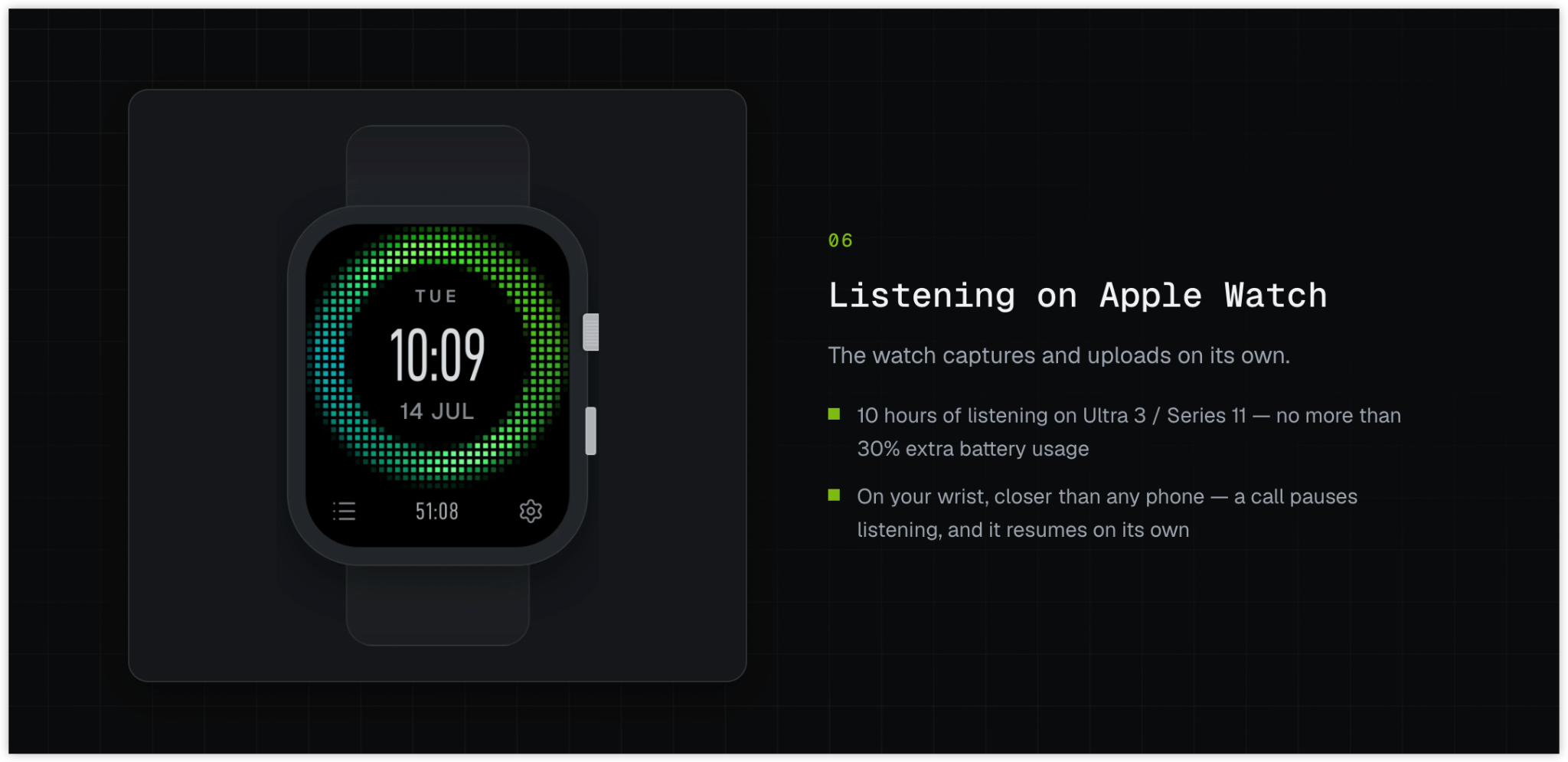
Hemory listening interface shown on Apple Watch.
A private setup check can help you learn the controls, reminders, permissions, and battery needs without putting a conversation at risk. If someone declines, or you cannot confidently manage the recording, use an alternative such as agreed notes. The goal is not to capture every exchange; it is to use a method that fits the people, setting, and task.
A quick pre-use checklist
- Have I explained the recording and given everyone a clear choice?
- Have I checked the local rules and any workplace or confidentiality policies that apply?
- Does the current product documentation support my exact device and setup?
- Do I know how to start, pause, and stop capture—and how Schedule Mode actually works?
- Have I checked how the resulting audio, transcript, and Memory are handled?
- Do I have an agreed alternative if someone declines or the conversation becomes unsuitable to record?
Use a wearable only when the answers fit the situation. If you choose Hemory, confirm the supported setup first, then capture only after people understand and agree. That can let you stay present in the discussion and return later to captured context, without treating a recording as a substitute for consent or judgment.
FAQ
Does Schedule Mode record conversations automatically?
No. Hemory’s Schedule Mode provides a reminder and one-tap start and stop actions. Do not treat it as silent automatic recording.
Can I assume my smartwatch works if Hemory supports Wear OS?
No. Platform support does not establish compatibility with every watch model or setup. Check current product documentation for your exact device. Hemory’s product information specifically describes independent capture and upload on Apple Watch; do not assume the same behavior for other watches.
Does checking audio storage tell me how transcripts are handled?
Not necessarily. Check the current information for audio, transcripts, and organized Memory separately rather than assuming the handling is identical.