

 Hemory Team
On this page
A useful idea can arrive halfway through a walk, when stopping to type would break your train of thought. With Hemory, you control when listening starts and stops: use Manual Mode for an idea that comes unexpectedly, or Schedule Mode when you want a reminder during a regular listening window. Here’s how to choose between them and what to expect when you want the idea back later.
TL;DR
- For an unexpected idea, start listening in Manual Mode and stop it when you’ve finished speaking.
- Schedule Mode is for set listening times: Hemory sends a reminder, and you choose when to start and stop with one tap.
- The current Features page lists iOS and Apple Watch. Check Hemory’s current app listing if you plan to use Android or Wear OS.
- Hemory can create a timestamped transcript and lets you ask its built-in Q&A Agent about your Memory, but neither guarantees every detail will be found or transcribed perfectly.
Choose the mode that fits the moment
Manual Mode fits an idea that arrives without warning. You decide when to start listening and when to stop, so recording does not begin silently or just because a schedule is set. Start before you say the idea, then stop when you’re done.
Schedule Mode fits a recurring window, such as a regular walk or commute. Set listening times and Hemory can send a reminder with one-tap start and stop actions. The schedule is a reminder-based control, not permission for Hemory to start recording without your action.
| Situation | A practical choice |
|---|---|
| A thought comes up unexpectedly | Start and stop listening yourself in Manual Mode. |
| You often have ideas during a regular time window | Set a Schedule Mode reminder, then choose when to start and stop. |
| You only want to save one short thought | Use Manual Mode and stop listening after you’ve said it. |
Capture a spontaneous idea in Manual Mode
When an idea comes to you, begin listening on your device before speaking. Say the thought in your own words, including any detail that makes it understandable later, then stop listening. You do not have to decide in advance which phrases will matter or type a polished note while moving.
For example, you might say: “For the next product review, compare the setup steps for first-time users with the steps for returning users. I’m not sure yet whether that needs a separate onboarding flow.” The uncertainty is useful context; don’t turn it into a decision just to make the note sound complete.
If you’re using an Apple Watch, Hemory’s Features page says the watch can capture and upload listening content independently. That supports capturing while away from your phone; it does not mean the watch records without your control. Use Manual Mode when you want to start and stop around the idea itself.
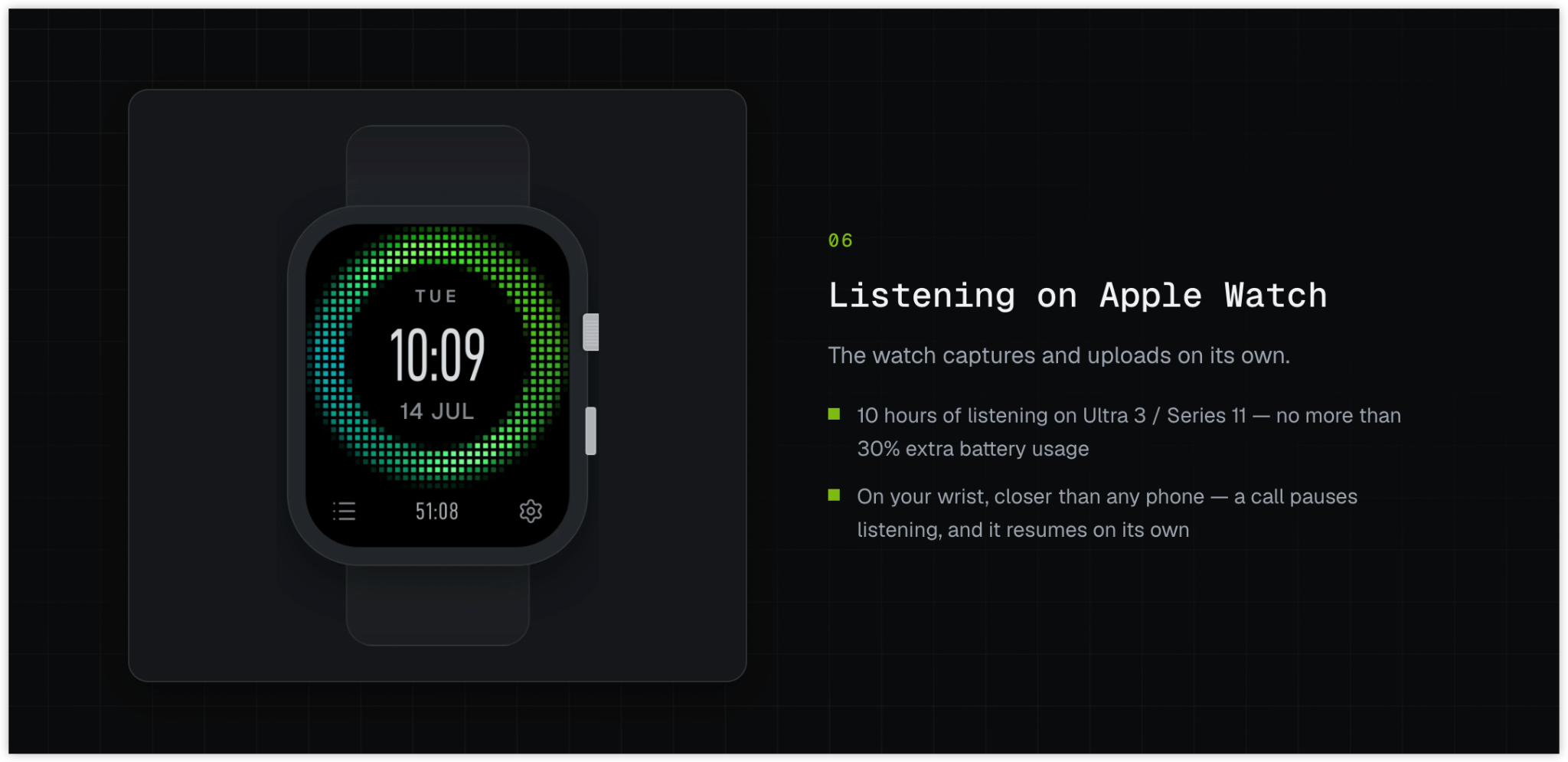
Hemory listening interface shown on Apple Watch.
Use Schedule Mode for a regular listening window
If ideas often come during the same part of your day, set a listening time in Schedule Mode. When the reminder arrives, use its start action if you want to listen, then use the stop action when you’re finished. You remain in control of whether listening starts and ends.

Set listening times for weekdays and weekends.
A schedule can make a recurring routine easier to remember, but it is not the best fit for a single, unpredictable moment. For that, Manual Mode is more direct. You can also leave a scheduled window unused if you do not want to start listening when reminded.
Find the idea later
A listening session produces a timestamped transcript, and Hemory’s summaries vary by the kind of activity. To revisit a spoken idea, use the built-in Q&A Agent to ask about the topic or context you remember—for example, “What idea did I mention about onboarding during my walk?” Hemory’s Q&A supports follow-up questions and retrieval across past conversations, but a result is not a guarantee that every relevant detail was captured or found.

Retrieve past commitments and draft follow-up tasks.
For wording that matters, compare the answer with the available transcript. Hemory also supports playback of transcript lines on the device that recorded the session. A transcript is a record of speech, not a guarantee of perfect transcription, so treat uncertain wording accordingly.
The Features page currently lists iOS and Apple Watch as supported platforms. It also marks macOS, Windows/Linux, the Web app, and self-hosting as coming soon. Android and Wear OS support is not listed there, so confirm current availability in Hemory’s app listing before planning to use either.
Make it a simple habit
For the next idea that comes while you’re on the move, try Manual Mode: start listening, say the thought with enough context to make sense later, and stop. If you regularly capture ideas at a predictable time, consider Schedule Mode and respond to its reminder yourself. That keeps capture deliberate while reducing the need to interrupt the moment to type.