Hemory Team
On this page
When you need an old detail, the best route depends on what you remember and what you need to do with the answer. Searching records yourself gives you direct control over the source. A connected agent can retrieve and reason across accessible conversation Memory, which may help when several discussions matter or the detail is only one part of a larger task.
TL;DR
- Look it up yourself when you know the likely conversation, have a distinctive clue, or want to inspect one specific detail.
- Consider a supported MCP-connected agent when the question spans accessible conversations or the answer needs to feed into further work.
- An agent’s access depends on its connection and permissions. Give it the goal and necessary current information, then review the result; neither approach guarantees a complete record.
What are you comparing?
Direct lookup means you lead the search and inspect the relevant records yourself, using the search or question-answering options available in your source. Agent-assisted retrieval means a supported external agent uses MCP (Model Context Protocol) to access conversation Memory permitted by its connection, then performs its own reasoning or drafting.
These approaches differ in who does the retrieval and synthesis—not in whether the answer is automatically correct. The conversations must already have been captured and be accessible. An agent cannot retrieve an exchange that was never recorded, and a failed search does not prove that no relevant discussion exists.
| Situation | Direct lookup | MCP-connected agent |
|---|---|---|
| You remember the likely conversation or a distinctive phrase | Often a straightforward way to inspect the source yourself | May add little if one quick lookup will answer the question |
| You have only a broad topic or several discussions may be relevant | You may need to search and compare records one by one | Can be useful if the connected agent can access the relevant Memory and the task benefits from synthesis |
| You need one detail, such as wording or a date | Lets you focus on the record and its surrounding context | Can help locate a candidate, but review the source before relying on consequential details |
| The answer will feed a document or follow-up | You can gather the material and carry it into the next task | Can combine retrieval with a draft, reducing manual compilation and retelling |
| You need to judge a commitment, approval, or current status | You can examine the relevant wording and other records yourself | Ask the agent to distinguish what was agreed from what remains unclear, then apply your judgment |
Choose based on the clue and the next step
Look it up yourself when the search is narrow
Start with direct lookup when you can name the likely discussion, remember a distinctive phrase, or need to inspect a particular statement. You control which record you open and can read the surrounding exchange rather than relying on a condensed answer.
This is also a sensible choice when you do not need synthesis. If the question is simply whether a particular detail appears in a known conversation, bringing in an agent may add an unnecessary handoff. Use the search or Q&A method available in the record system you already use; access and search features differ between systems.
Consider an agent when retrieval connects to a larger task
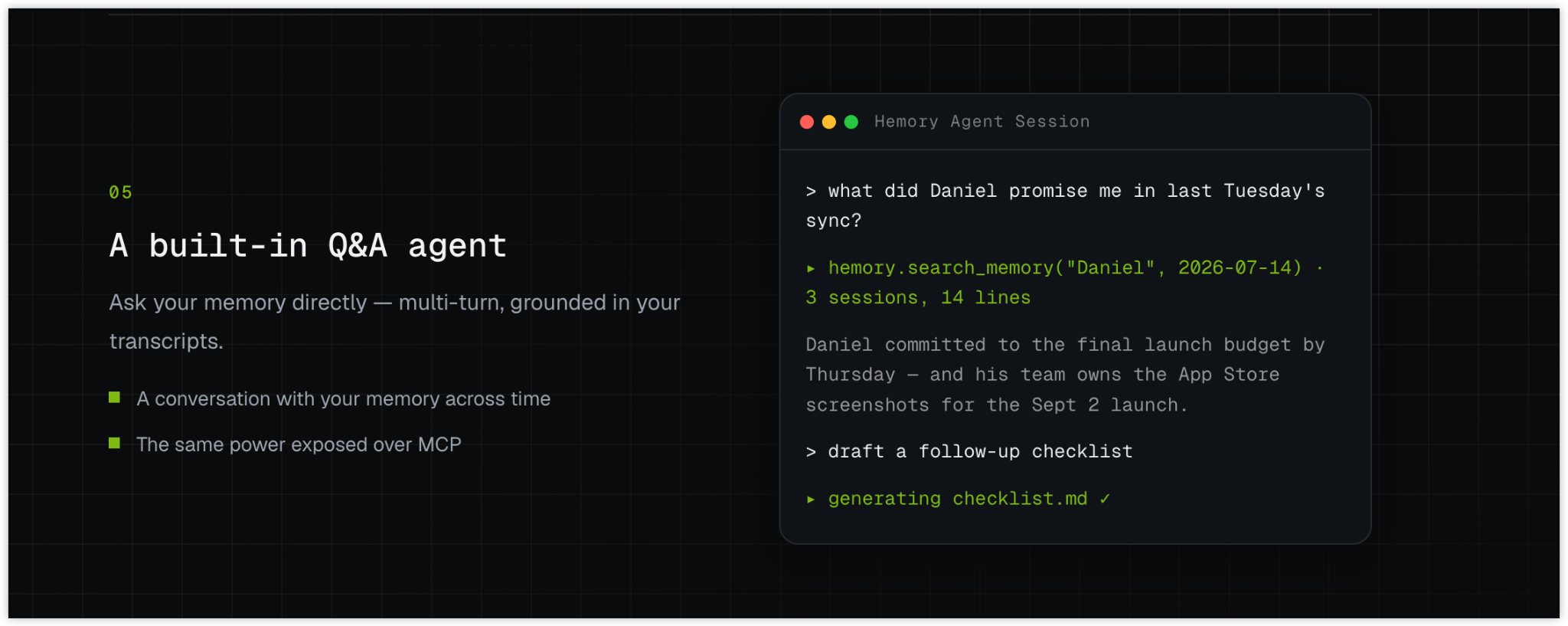
An MCP-connected agent may be more useful when several accessible conversations could matter, your clues are incomplete, or the answer is a starting point for a document or follow-up. Instead of manually gathering and retelling every discussion, you can state the task and let the agent retrieve context it is allowed to access while it works on the next deliverable.
For example, if you are preparing a follow-up from several discussions about a customer request, ask the agent to find relevant context and separate stated requirements from suggestions and open questions. Supply any current information the conversations cannot establish, such as what has changed since they took place. The agent’s draft is a starting point for your review, not proof that a request was approved or that a commitment was completed.
Check the connection before relying on it
An MCP connection does not mean every client has identical tools, permissions, or behavior. Confirm that your chosen supported agent is connected to the relevant Hemory Vault and that its permissions allow access to the Memory needed for this task. A public integration listing is not independent testing of every client.
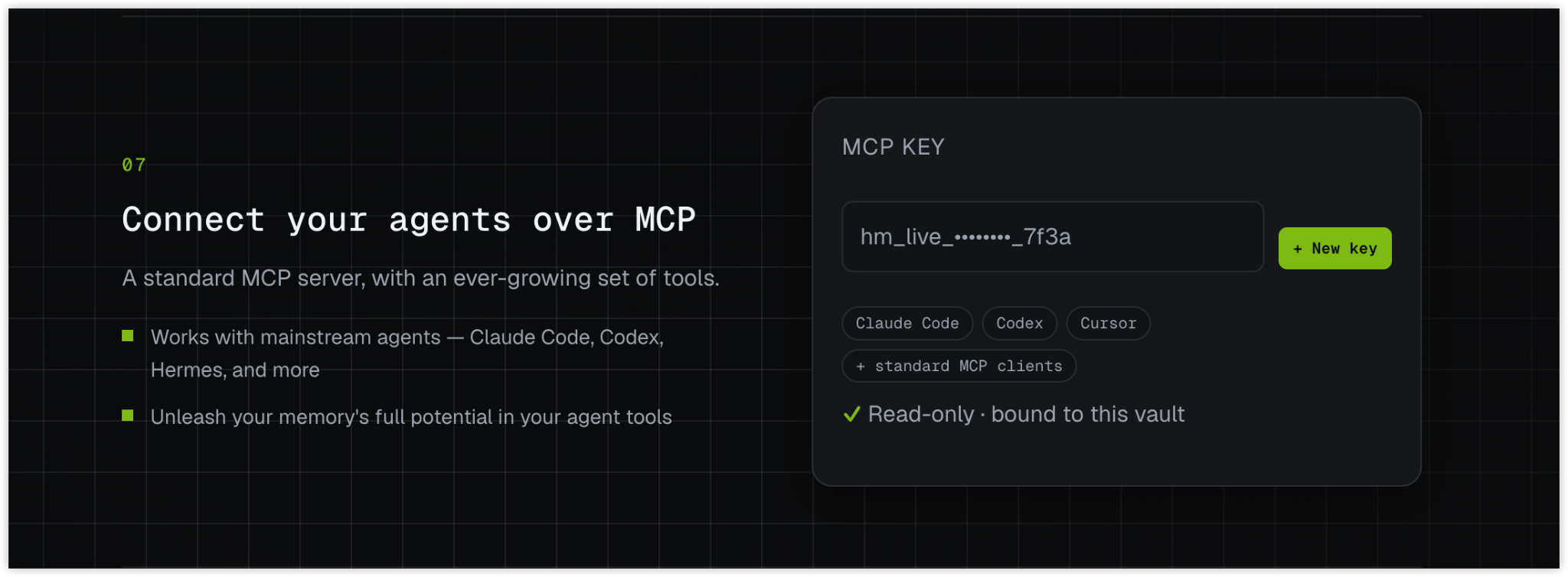
Hemory’s role is to capture and organize conversations and make relevant Memory available through supported access. The external agent performs its own retrieval, reasoning, and drafting. You supply the goal and necessary current facts, decide whether the result fits the situation, and carry it into your work. Do not assume the agent can search every record or take action in another system.
Make either approach easier to judge
Use the clues you actually have: a topic, approximate period, person, project, or phrase. You do not need to remember all of them before beginning. Treat results as candidates to assess, not as proof that the search found everything.
For a direct lookup, read enough surrounding context to tell whether a statement was a proposal, an accepted decision, or a later update. For an agent-assisted result, give a focused goal and ask it to distinguish what the conversations establish from what remains uncertain. If a detail affects a decision or next action, inspect the relevant record when it is available. If the record is missing or the answer depends on a current fact, use another source or ask a focused question.
The right choice is the one that provides enough context for the task without making you repeat work unnecessarily. If you often need to remember and reuse real-world discussions, capturing them in Hemory can reduce the notes and reconstruction you would otherwise have to do. Later, you can retrieve relevant context yourself or use a supported connected agent when the task benefits from agent-led retrieval and drafting.
FAQ
Does an MCP agent search every conversation in Memory?
Do not assume that it does. Retrieval depends on the supported client, its connection, and the permissions in the Vault. Confirm that the connection can access the records relevant to your task.
Should I use an agent for one exact quote?
Usually, start with the simplest route that lets you inspect the source. An agent may help locate a candidate, but check the original context before using consequential wording or attribution.
Can an agent tell whether a past suggestion was approved?
It can help examine accessible conversations, but the distinction depends on what the records establish. Review the wording, scope, and any later evidence; do not treat a suggestion, a mention, or a draft as approval by itself.
What if neither search finds the detail?
A failed search does not prove the conversation was never captured or that no decision was made. Try another clue or source if one is available. If the necessary detail has no usable record, ask someone who can clarify it rather than filling the gap with an assumption.