

 Hemory Team
On this page
A meeting bot and a wearable can both produce a transcript, but they get the audio in different ways. A bot typically relies on a meeting platform or integration; a phone or recorder uses a device microphone to pick up nearby sound. That difference affects what each can capture, what it depends on, and how people may notice it. It does not, by itself, answer whether recording is appropriate or what rules apply.
TL;DR
- A meeting bot gets audio through a supported meeting platform or integration. A phone, dedicated recorder, or wearable captures sound through its microphone.
- Bots depend on platform access and meeting setup. Device-based capture depends on the device, microphone placement, and when listening starts.
- Visibility and coverage vary by setup. Neither route guarantees that everyone knows they are being recorded or that every relevant voice is clear.
- The capture method does not determine consent requirements or data handling. Check applicable law, workplace or client rules, and the tool’s policies before recording.
How the two capture methods work
Meeting bots: audio through a meeting platform
A meeting bot is software that obtains meeting audio through a supported video-conferencing platform or integration. Depending on the implementation, it may join as a participant or connect through another authorized route. It can capture only the audio the platform makes available to it under that setup.
This makes a bot dependent on platform support, access permissions, and the meeting configuration. It may be suitable for a scheduled online meeting, but it should not be assumed to capture an in-room conversation before or after the call, or discussion happening outside the platform.
If a bot joins as a participant, people may see it in the meeting’s participant list. Other implementations may work differently, so check the actual product and platform rather than assuming every bot has the same visibility.
Phones, recorders, and wearables: audio through a microphone
A phone, dedicated recorder, or wearable captures nearby sound through its microphone when listening is started or otherwise enabled. It does not need a meeting-platform integration to pick up a room conversation, but its results depend on the device, its position, the environment, and whether listening is active.
A device microphone may pick up nearby speakers as well as other room sound. It does not guarantee clear audio from everyone: distance, noise, overlapping voices, and the device’s placement can affect what is captured. A device used during an online call may also pick up sound from the room without necessarily receiving a clean audio feed directly from the meeting platform.
What the capture route changes
| Question | Meeting bot | Phone, recorder, or wearable |
|---|---|---|
| Where does the audio come from? | A meeting platform or supported integration | The device microphone and nearby sound |
| What does it depend on? | Platform support, authorization, and meeting setup | A suitable device, microphone placement, and active listening |
| What might it cover? | Audio made available from that meeting | Sound within microphone range while listening is active |
| What might it miss? | Room conversation outside the meeting or audio the platform does not provide | Distant or obscured speakers, and conversation outside the device’s range or listening period |
| How might people notice? | A bot may appear as a participant; visibility depends on the implementation | A visible device may signal recording, but people may not notice it; do not rely on the hardware alone to notify them |
These are general mechanisms, not guarantees about a particular product. A tool’s permissions, supported platforms, controls, and policies determine the details. Also separate the capture route from data handling: where audio is collected does not tell you where transcripts or other records are stored, who can access them, or how long they are retained.
Does either method need participants’ consent?
The hardware or software route does not settle that question. Consent and notice requirements can depend on where people are, the type of conversation, workplace or client rules, and the platform or organization’s policies. This is general information, not legal advice.
Before recording, tell participants what you plan to capture and why, and check the rules that apply to the situation. Do not assume a meeting bot’s appearance automatically provides adequate notice, or that a small or wearable device makes recording unobtrusive or acceptable. If you cannot establish that recording is appropriate, pause and clarify before starting.
For a specific tool, check separately how it signals that capture is active, what it records, where resulting transcripts or notes are handled, who can access them, and how deletion works. The capture mechanism alone cannot answer those questions.
How to choose a route for your situation
Start with the conversation you need to capture:
- A planned online meeting: A bot may fit if the platform and tool support the connection and participants are appropriately informed. Confirm what meeting audio it can access and whether it joins visibly.
- A room conversation or an exchange outside a video call: A phone, recorder, or wearable may be more relevant because it uses a nearby microphone rather than relying on meeting-platform access. Consider placement, background noise, and whether listening will be active for the whole exchange.
- A mix of online and in-person discussion: Neither route should be assumed to cover everything. Decide which portions matter, explain the recording plan, and use an appropriate method for each setting.
- A conversation where recording is not appropriate: Take notes, ask permission to record, or use another agreed way to preserve the key points.
In every case, test the setup in a suitable low-stakes situation before relying on it for an important conversation. Check that the intended audio source is actually available and that the resulting record is usable. Do not treat a transcript as proof that every speaker or detail was captured correctly.
Where Hemory fits
Hemory is an example of device-based listening, not evidence of a meeting-bot connection. Its supplied Features-page description lists listening on iOS and Apple Watch; it also describes Apple Watch as able to listen and upload independently. Schedule Mode sends a reminder and uses one-tap start and stop, so the feature description does not establish silent, automatic recording without user action.
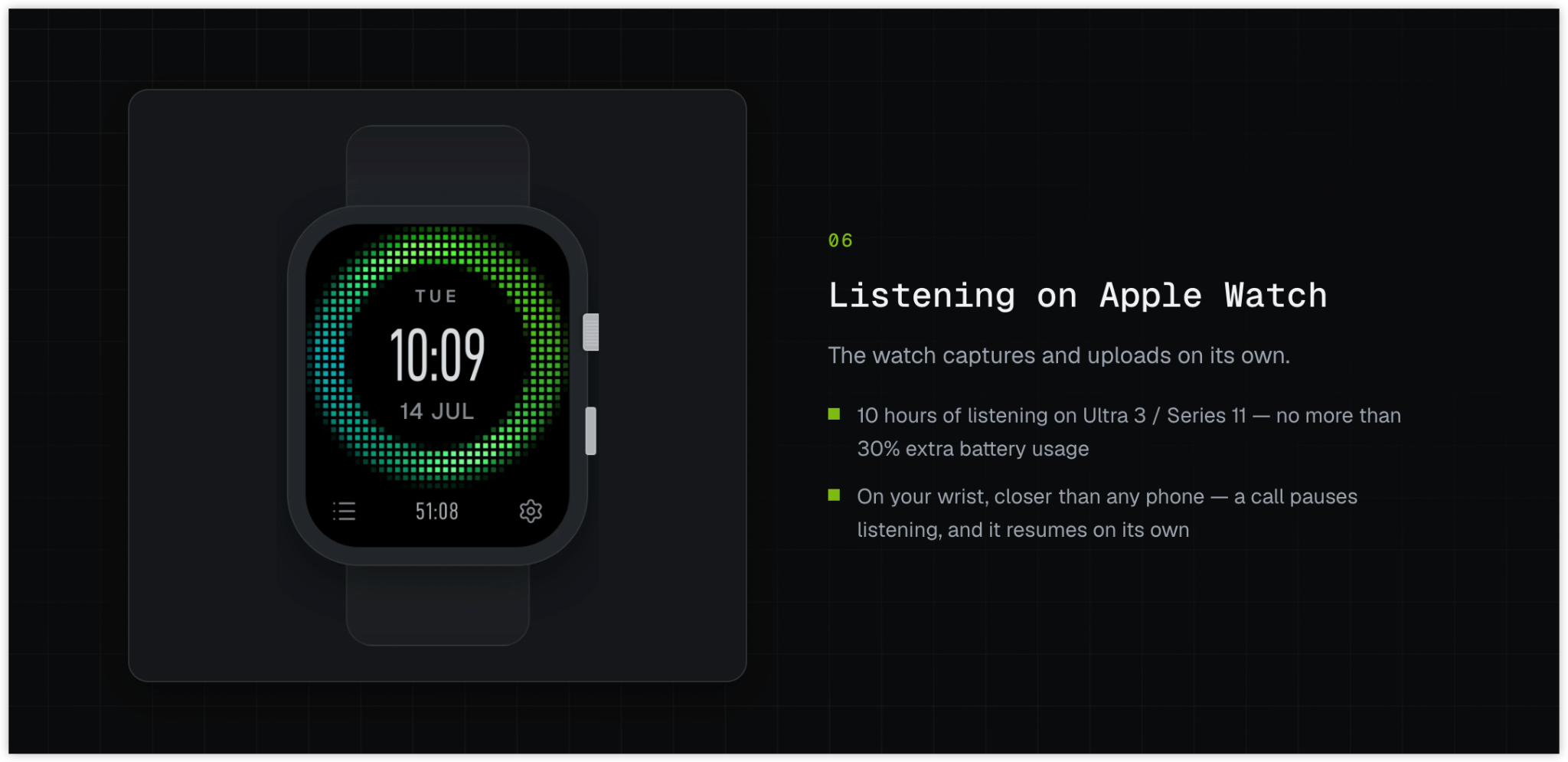
Hemory listening interface shown on Apple Watch.
The Features page describes listening sessions producing timestamped transcripts with speaker labels and AI cleanup. That can give the user a record to review after a discussion, rather than requiring them to select and write down every detail while participating. The page does not establish that Hemory joins meeting platforms as a bot, nor does a device-based capture description resolve participant-consent rules or the handling of every type of data. Check the relevant rules and product information for your intended use.

Review transcripts with speaker labels and timestamps.
FAQ
Is a meeting bot always visible to everyone?
Not necessarily. A bot that joins as a meeting participant may appear in the participant list, but implementations and platform behavior vary. Check the actual setup and do not treat visibility as a substitute for informing people.
Is recording on a phone or wearable automatically more private?
No. A device may be less noticeable than a bot listed in a meeting, but that does not establish that participants know about the recording, that it is appropriate, or how the resulting data is handled.
Does using a phone instead of a bot change consent requirements?
The device type alone does not answer that. Check the applicable law, workplace or client rules, and tool policies for the situation, and make the recording plan clear to participants.
Take the next step
Before choosing a recorder, describe the conversation you need to capture, where it will happen, and which voices or portions matter. Then confirm that the method can access that audio, that people understand the plan, and that the tool’s data handling fits your needs. The right choice is the one whose capture route matches the conversation and whose use is appropriate—not simply the one that produces a transcript.