

 Hemory Team
On this page
A useful idea can arrive while you are walking, commuting, or away from your desk. Stopping to write it down may break your train of thought, but trying to remember it later leaves details at risk. With Hemory Manual Mode, start listening when the idea comes up, stop when you are finished, and return to the resulting transcript when you need it.
TL;DR
- Start and stop listening yourself with Manual Mode on your iPhone or Apple Watch.
- Hemory creates a timestamped transcript for the listening session; transcription may not capture every word perfectly.
- Later, ask Hemory’s built-in Q&A about the idea to retrieve relevant transcript context across conversations.
Capture the idea with Manual Mode
Use Manual Mode when you want to decide for yourself when listening begins and ends. Hemory supports iOS and Apple Watch. On either device, open Hemory and use the Manual Mode listening controls to start when you are ready to speak.
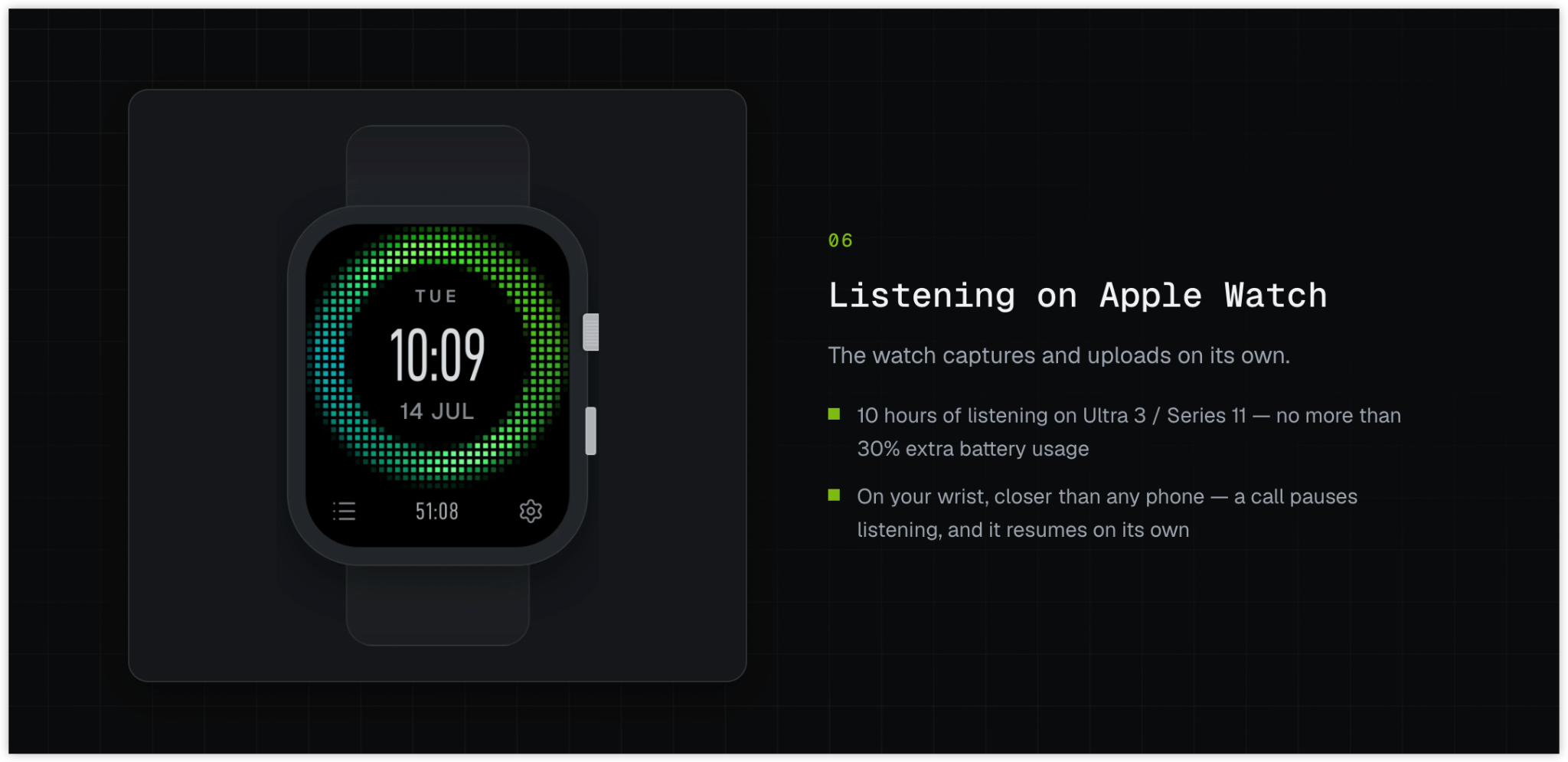
Hemory listening interface shown on Apple Watch.
- Start listening when the idea arrives. Say the thought in your own words. You do not need to organize it into polished notes first.
- Add the details that will help you recognize it later. Mention the project, person, or problem it relates to if that context matters. You do not need to predict every future use.
- Stop listening when you have finished. Manual Mode is user-controlled; Schedule Mode is different and provides reminders with one-tap start and stop actions rather than silently recording.
A listening session produces a timestamped transcript with speaker labels and AI cleanup. A transcript is a useful record, not a guarantee that every word or speaker label is perfect. Keep the first capture brief if that suits the moment; you can add a separate voice note or detail later if needed.
When other people are present, consider their privacy before starting. Obtain any consent required for your situation and follow applicable rules.
Find the idea later with transcript-based Q&A
After the idea has been captured, ask Hemory’s built-in Q&A a question that describes what you remember. It supports multi-turn questions grounded in transcripts and can retrieve across conversation sessions.
For example, ask: “What idea did I capture about making the onboarding checklist easier to use?” If the first answer is too broad, narrow the follow-up with a detail you recall, such as the project or the problem the idea addressed. You do not need to remember the exact wording.
If you want to check the source, open the relevant transcript. Hemory supports playback of transcript lines on the device that recorded the listening session, so you can listen to the corresponding part when playback is available there.

Find individual statements in a searchable transcript.
If the idea does not turn up
A missing result does not prove the idea was never captured. Try a different description or clue. If you still cannot find it, check another place where you may have recorded it, or write down what you currently remember. Hemory cannot retrieve an exchange that was never captured or is not accessible to the selected Q&A route.
The aim is to spend less attention selecting and writing down every potentially useful detail in the moment, then return to the captured idea when you have a reason to use it. Start a Manual Mode session the next time a thought is worth keeping, and stop it when you are done.