

 Hemory Team
On this page
When a customer call prompts a new requirement, earlier conversations with that customer may contain constraints, objections, or requests that change how you interpret it. Re-reading every note or briefing an AI agent on the full history takes work—and a detail you forgot to include may be left out. A connected agent can help retrieve relevant, previously captured context and use it in a draft. You still need to review the evidence, add what is current, and decide what belongs in the requirements.
TL;DR
- Start with the requirements task and a useful clue, such as the customer, product area, or topic. You do not need to assemble a full chronology first.
- A supported connected agent can retrieve relevant Hemory Memory that is available to its connection and help draft stories or requirements from it.
- Ask for conversation references where the agent can provide them. Check important claims against accessible source material and mark gaps or conflicts rather than filling them in.
- Add current information and use your judgment before sharing or adopting the draft. Neither retrieval nor the draft establishes approval or completeness.
1. Confirm where the earlier conversations are available
Start by identifying where the customer history lives. It may already be in a CRM, research notes, a transcript archive, or another shared document. Use a source your team can access; information outside a CRM does not automatically require a new tool.
If you want an agent to retrieve history from Hemory, the relevant discussions must already have been captured there and be accessible through a supported connection. Hemory can provide Memory and conversation context; it cannot reconstruct a call that was never recorded. A connected agent can only use the context its connection makes available, so do not assume it can search every conversation in every workspace.
Hemory’s built-in Q&A supports multi-turn questions about transcript-based Memory across conversations. A supported external agent can also access Hemory Memory through its connection, but available scope and behavior depend on that connection. The agent performs its own retrieval and drafting; Hemory does not guarantee that every relevant discussion will be found or automatically update a project system.

Retrieve past commitments and draft follow-up tasks.
2. Give the agent a focused task, not a complete history
State what you are creating and what information will help locate the right conversations. Useful starting clues include:
- The customer or account name, if known.
- The product area, feature, workflow, or problem under discussion.
- The output you need: for example, a set of user stories, a requirements outline, or a draft for review.
- Current facts or decisions that have changed since the conversations took place.
You can ask the agent to search accessible Hemory conversations as part of the task. You do not need to prepare a complete manual summary before it can begin. If the task is a simple question about one known conversation, use the appropriate Q&A route instead of setting up a larger drafting workflow.
A request might read:
Draft an initial requirements outline for [product area or customer need]. Use relevant captured Hemory conversations about [customer or topic] that you can access. Identify earlier needs, constraints, objections, and open questions. Distinguish what was stated from your interpretation. Include conversation or date references where available, and flag conflicting or missing information. Do not infer approval, priority, owner, or deadline. Use these current details: [new information].
The request gives the agent a retrieval direction and a deliverable. It does not require you to retell every earlier discussion. If the agent cannot provide a usable reference, treat that as a cue to locate and review the source yourself rather than assuming the reference exists.
3. Separate customer evidence from decisions and interpretation
Earlier conversations can inform a requirement without proving that the team accepted it. As you review retrieved context, distinguish among:
| What the record supports | How to handle it in the draft |
|---|---|
| A customer need, constraint, or objection | Describe it as customer evidence and retain its context. |
| A suggestion or requested feature | Label it as a request or proposal unless the team adopted it. |
| An accepted decision or commitment | State the decision and its conditions only when the record supports them. |
| A conflict, missing detail, or uncertain attribution | Keep it open for clarification instead of resolving it by inference. |
| A current instruction or update you supplied | Label it as current information, distinct from what was said earlier. |
A person mentioning a feature does not establish that the team approved it. A speaker is not automatically the owner of a follow-up. A missing deadline is not evidence that no commitment was made, and a past commitment does not show that the work is complete.
When the agent provides conversation or date references, use them to trace important statements to accessible records. If a reference is absent or unclear, search using the customer or topic clues available to you, or ask a focused follow-up. A transcript is a record of speech, not a guarantee that every word was captured perfectly or that an interpretation is correct.
4. Turn the retrieved context into reviewable requirements
Ask for an initial draft that keeps evidence, proposed product behavior, and unresolved questions distinct. For each requirement or story, include only fields that help your team assess it:
- User need: What the customer is trying to do or what constraint they described.
- Proposed requirement: The product behavior that might address the need.
- Supporting context: The conversation or date reference, when available.
- Status: For example, proposed, accepted, or awaiting clarification, based on the evidence you have.
- Acceptance criteria: Observable conditions that would show whether the proposed behavior meets the requirement.
- Open questions: Information that would materially change the requirement or its scope.
For example, if an accessible call record says a customer cannot complete a workflow when a required field is missing, the draft can state the reported need and propose a response for that case. It should not invent the field’s name, the customer’s priority, or a decision to build the feature. Those details need evidence or a clearly labeled follow-up question.
Use acceptance criteria to make a proposal reviewable, not to smuggle in assumptions. If a condition, owner, priority, or deadline was not established, leave it open or label it as proposed. A requirements draft is useful when a teammate can see what is supported, what is proposed, and what still needs a decision.
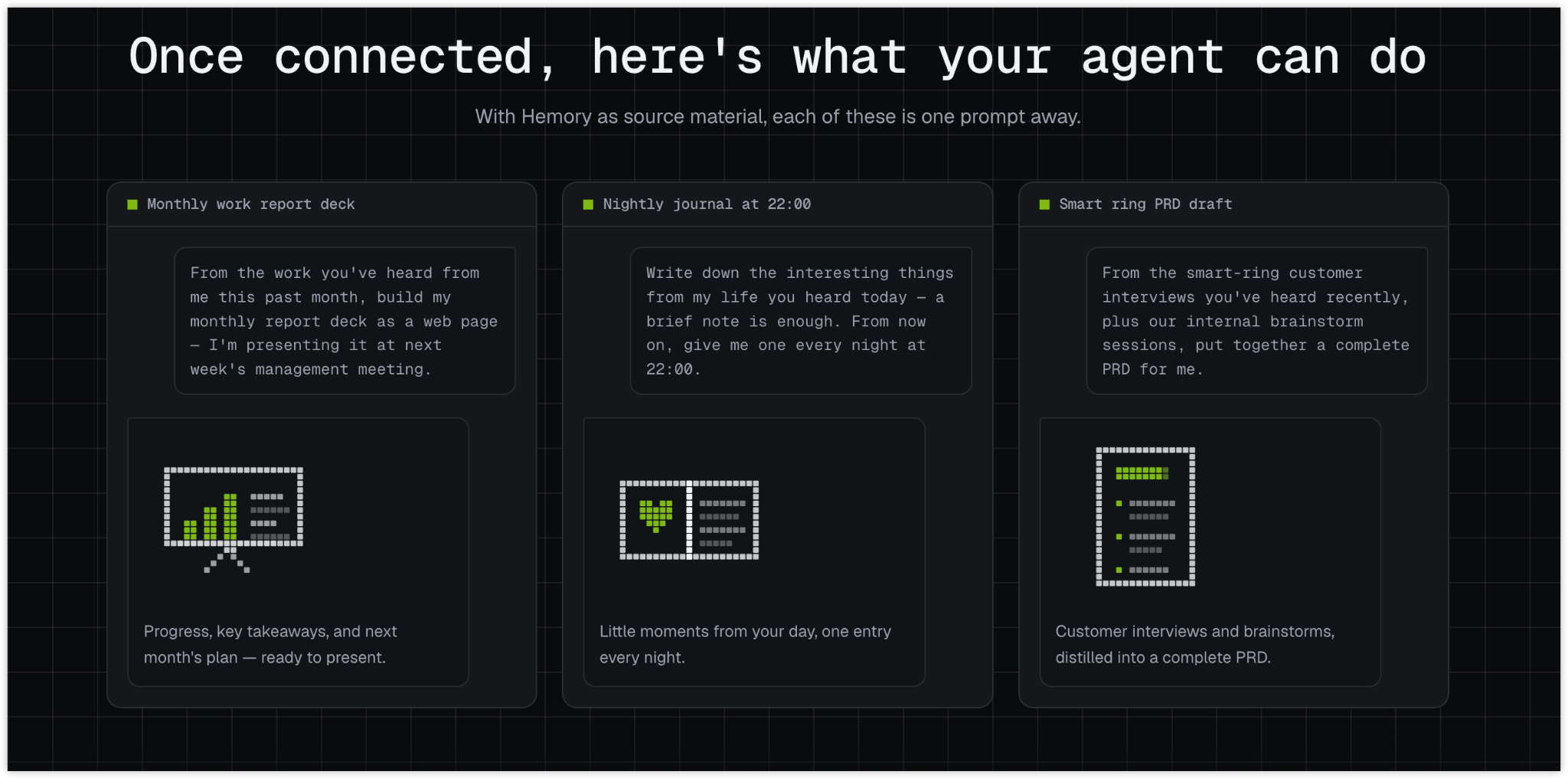
Turn saved context into reports, journals, and product requirements.
5. Review consequential claims and add what is current
Before using the draft, check the points that could change product scope or the next action:
- Attribution: Is the statement tied to the right customer or speaker, where the source makes that clear?
- Meaning: Does the surrounding conversation support the interpretation, or is it a request, concern, or possibility?
- Status: Was the idea proposed, accepted, or left open? Did a later record explicitly change it?
- Currency: Has the customer’s situation or the team’s plan changed since the discussion?
- Actionability: Are any acceptance criteria or next steps based on current information rather than an unstated assumption?
You do not need to re-check every sentence if it has no bearing on the decision. Focus review on claims that affect scope, commitments, customer expectations, or implementation. If the record is unclear, preserve the uncertainty and ask the customer or team for the missing detail.
Then carry the reviewed requirements into your team’s normal review process. The agent can help retrieve context and draft; you and your team determine what to accept, revise, prioritize, or share. Hemory supplies conversation Memory through the supported route, not approval or automatic writeback to a requirements system.
If the agent cannot find the context
A missing result does not prove that the conversation never happened or that no requirement was discussed. The conversation may not have been captured, may not be accessible through the connection, or may not match the clues you provided. Try another useful clue or consult another available source. If the information is not recorded, ask a focused question rather than treating a guess as customer evidence.
For future calls, preserving the discussion in Hemory can reduce the need to decide in real time which details to write down for a later requirements task. You can stay engaged in the conversation, then retrieve relevant context when a concrete drafting need arises. That helps with later reuse, but it does not guarantee a complete record or remove the need for review.
FAQ
Does the agent need a complete summary of every earlier call?
No. Start with the task and useful search clues, then let a supported connected agent retrieve relevant captured context it can access. Add a concise summary or specific current document only when it supplies information the agent cannot retrieve or that has changed.
Will the agent find every relevant customer conversation?
That is not guaranteed. Results depend on what was captured, what the connection can access, and the clues used. Treat retrieved material as useful context, not proof that the full history has been found.
Should I treat a retrieved customer request as an approved requirement?
No. A request is evidence of what the customer asked for; it does not by itself establish a team decision. Label proposals and unresolved questions clearly, and follow your team’s normal review process before treating a requirement as accepted.
Start with one real drafting task
Choose a customer or product question for which earlier conversations may change the draft. Give a supported agent that goal and a few useful clues, review the context it retrieves, and ask it to separate evidence from proposals. This can reduce the work of assembling and retelling history while leaving the important decisions with you and your team.