

 Hemory Team
On this page
A client says on a call that they will confirm the budget after an internal review. A teammate agrees in a project discussion to own a follow-up by the end of next week, assuming the vendor responds. Neither commitment appears in a formal ticket or contract. Later, you need to know exactly what was agreed, by whom, and under what conditions. You can search your email, or you can search your conversation memory. Which source is more reliable for recovering informal commitments? Neither is universally better. Email search and conversation memory cover different parts of the commitment landscape, and each has blind spots. This guide compares them on coverage, nuance, traceability, and recency, then shows how to choose the right source, cross-check both, and reduce the chance that an informal commitment slips away.
TL;DR
- Email search is strongest when a commitment was written down, addressed to someone, and kept in a thread; it offers precise wording, timestamps, and recipients.
- Conversation memory is strongest when a commitment was spoken, carried conditions, or happened in an impromptu discussion that never produced an email.
- Neither source covers everything: email misses what was never written, and conversation memory misses what was never captured.
- Use email when you remember a phrase or sender; use conversation memory when you remember a person, meeting, or topic.
- Cross-check both sources before acting, especially when conditions or deadlines were discussed verbally.
- Hemory captures real-world conversations as transcripts and searchable Memory, so spoken commitments and their surrounding context can be revisited later.
What Counts as an Informal Commitment
An informal commitment is an agreement made without a contract, ticket, or formal approval. It might be a verbal “I’ll send that over,” a tentative yes in a call, or a condition attached to a follow-up. These commitments matter because work often moves forward on them, yet they rarely live in a single formal record.
Informal commitments usually carry three things: a condition, a timing, and an owner. The condition might be “assuming the vendor responds.” The timing might be “by end of next week.” The owner is the person who agreed to act. When you paraphrase the commitment later, any of these details can drop out. Recovery means finding the commitment and enough surrounding context to act on it correctly.
The same commitment may exist in email, in a spoken conversation, or in both. Each version may differ in detail. A call might include a caveat that never makes it into the follow-up email. An email might formalize a date that was only approximate in the conversation. Before you compare sources, it helps to classify the commitment and note what context you need to recover.
Use this short checklist to classify an informal commitment:
- Was it made in writing, verbally, or both?
- What condition or dependency was attached?
- What timing was discussed, and was it firm or tentative?
- Who owns the next step?
- What would you need to see to act on it correctly?
If you can answer these questions, you know what to look for. The next sections explain how email search and conversation memory each help you find it.
How Email Search Recovers Commitments
Email search is strong when the commitment was written down, addressed to someone, and kept in a thread. Threads preserve wording, timestamps, recipients, and attachments. That makes email a reliable traceability tool: you can see who said what, when, and to whom. If you need an auditable record, email is often the first place to look.
Email search depends on remembering a keyword, sender, or approximate date. If you recall the client’s name and the project, you can usually narrow the search. If you only remember that “someone agreed to something about the budget,” the query is weak, and you may have to scroll through threads. Search works best when you have at least one concrete anchor.
The bigger limitation is coverage. Spoken conditions, tone, and side conversations rarely appear in the thread. The written record can be accurate and still incomplete. A follow-up email might say “will revert” without the condition that was discussed on the call. Email search cannot recover a commitment that was never sent by email.
Consider a worked example. A client says on a call that they will confirm budget “after the internal review.” The follow-up email only says “will revert.” Email search finds the thread, the sender, and the date. It does not find the condition. If you rely on email alone, you might follow up too early or miss the dependency entirely.
Email search is a mature, keyword-driven tool. It is excellent for written commitments and formal exchanges. It is less useful for the spoken context that often surrounds an informal agreement.
How Conversation Memory Recovers Commitments
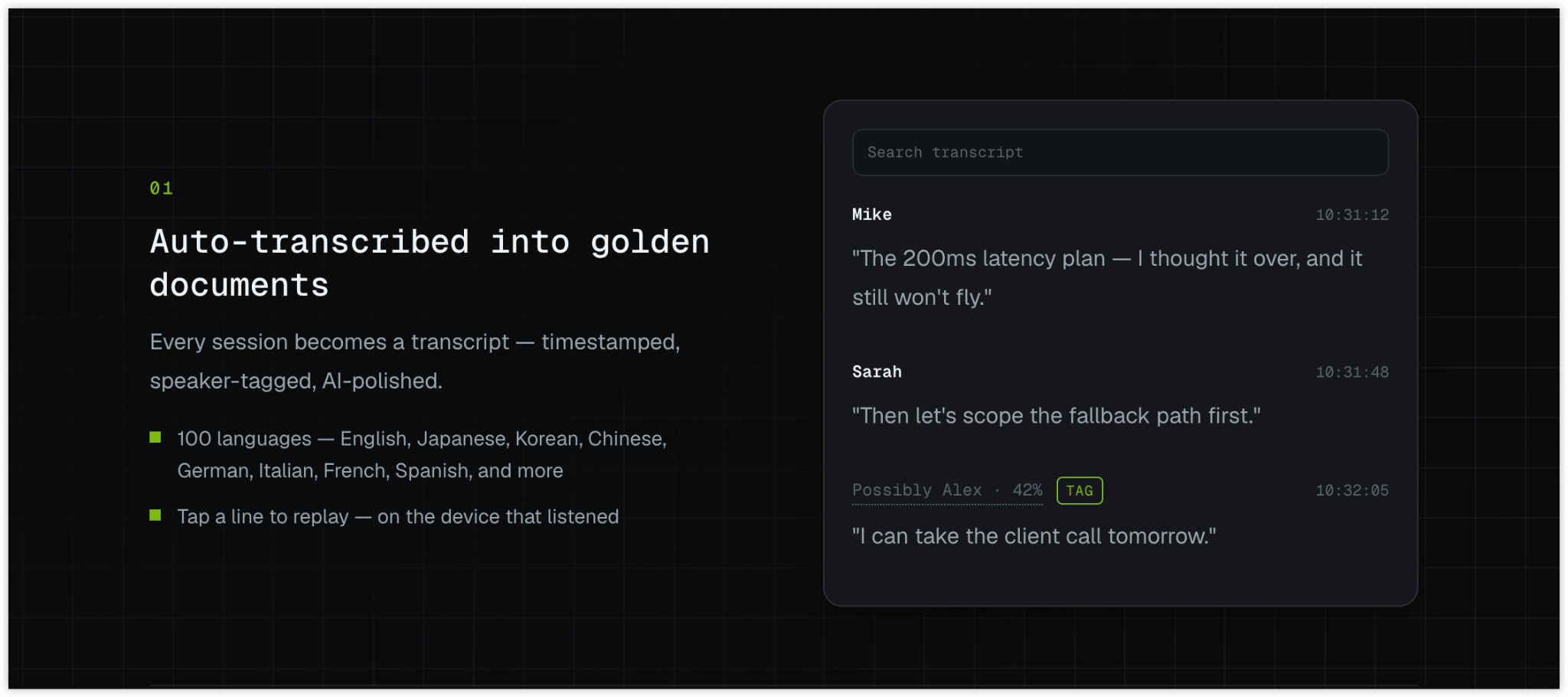
Conversation memory draws on transcripts of spoken discussions. That means it can surface commitments that were never written down. It also preserves surrounding context: who said what, the conditions discussed, and the sequence of the conversation. When a commitment was made verbally, this is often the only record that exists.
Retrieval works best when you can recall a person, topic, or rough time frame to narrow the search. If you remember that the discussion happened in a project call last week, you can focus there. If you remember the person but not the exact words, conversation memory can still help you find the exchange. This is different from email search, which often needs a keyword or sender.
Transcript quality depends on audio conditions, speaker clarity, and language. Noisy or overlapping speech can reduce accuracy. A transcript is a record of what was said, not proof of what was agreed. Interpretation still matters. You may need to read the surrounding lines to understand whether a tentative yes was a commitment or a polite deferral.
Here is a worked example. A teammate agrees in a project call to own a follow-up “by end of next week, assuming the vendor responds.” The email thread that follows mentions the follow-up but not the condition. Conversation memory can recover the condition that email never captured. You can see the sequence: the vendor dependency was discussed first, then the teammate agreed.
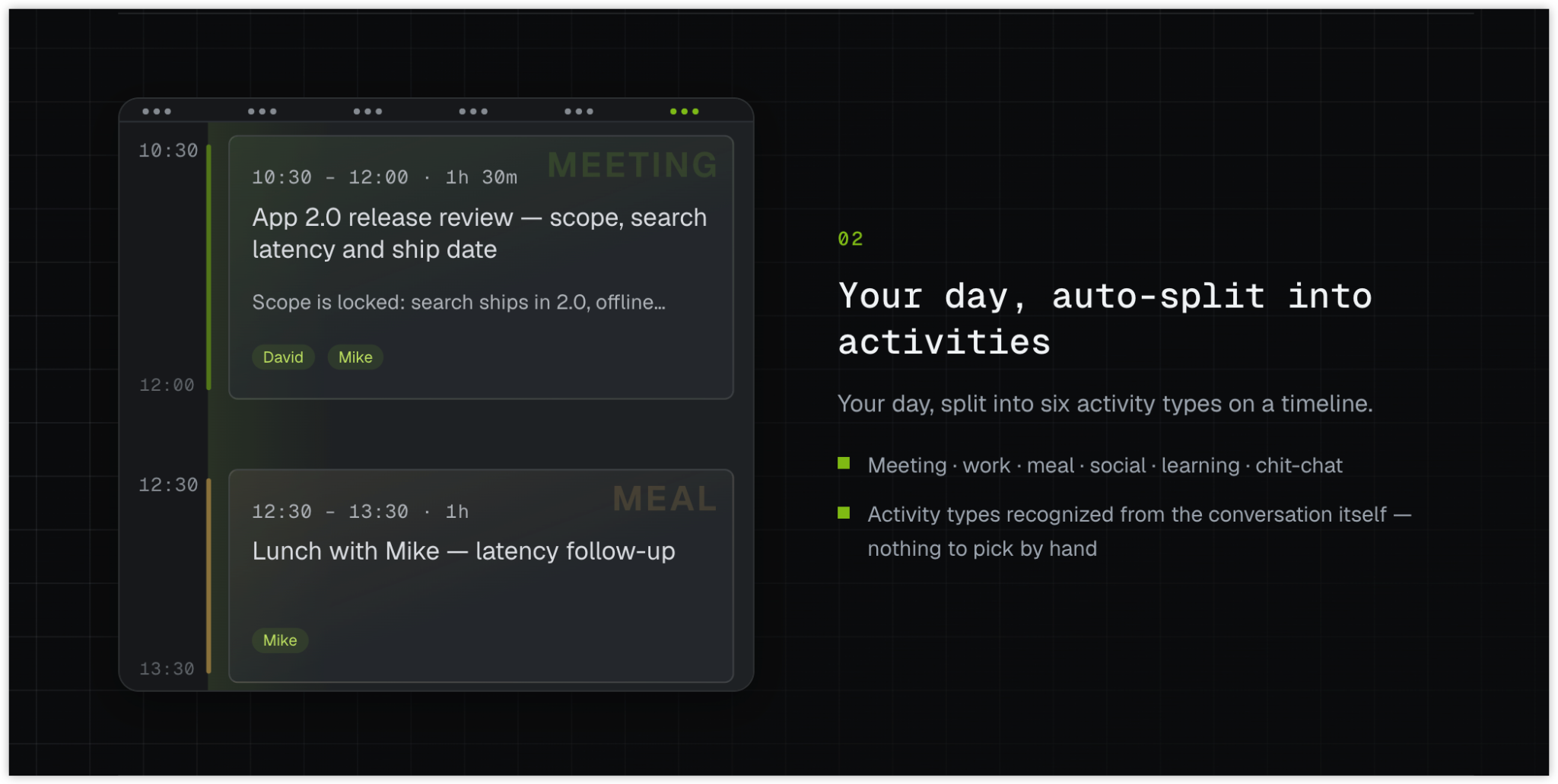
Hemory captures real-world conversations as transcripts and searchable Memory, so a spoken commitment and its surrounding discussion can be revisited later even when no email exists. Hemory creates transcripts with speaker labels and timestamps, and organizes conversation content by topic, people, and timeline. That structure helps you narrow a search when you remember the person or project but not the exact words. The built-in Q&A agent answers multi-turn questions grounded in verbatim transcripts, which can help you locate the relevant exchange. Keep in mind that transcript accuracy varies with audio conditions, and a transcript is not proof of agreement.
Comparing the Two on Coverage, Nuance, Traceability, and Recency
To decide which source to trust for a given commitment, compare them across five dimensions. Neither wins overall. Each is stronger in different situations.
| Dimension | Email search | Conversation memory | Stronger for informal commitments |
|---|---|---|---|
| Coverage | Written commitments, threads, attachments | Spoken commitments, impromptu discussions | Depends on where the commitment was made |
| Nuance | Precise wording, explicit statements | Tone, conditions, hesitation, sequence | Conversation memory for spoken conditions |
| Traceability | Sender, recipient, timestamp, thread history | Speaker labels, timestamps, transcript lines | Email for auditable records |
| Recency | Current only if the thread was updated | Current only if the conversation was captured | Depends on capture and updates |
| Searchability | Mature keyword search | Depends on transcript quality and retrieval tools | Email for keyword recall; conversation memory for person or topic recall |
Coverage is the first split. Email covers written commitments. Conversation memory covers spoken ones. Neither covers everything. If a commitment was made in a call and never written down, email search cannot find it. If it was written in an email and never discussed, conversation memory cannot find it.
Nuance favors conversation memory when conditions were spoken. Email preserves precise wording, but it often strips out the caveats and tone that shaped the agreement. Traceability favors email when you need an auditable record. Conversation transcripts offer speaker labels and timestamps, but they are a record of speech, not a signed document.
Recency depends on capture. Email is current only if the thread was updated. Conversation memory is current only if the conversation was captured. Searchability is mature for email and improving for conversation memory. Hemory organizes conversation content by topic, people, and timeline, which helps you narrow a search when you remember the person or project but not the exact words. That organization does not replace keyword search; it gives you another way in.
When Each Source Is Stronger
Start with email when the commitment was formalized in writing, involved external parties, or needs an auditable record. Email is also the better first stop when you remember a phrase or sender. If the commitment was confirmed in a thread with clear recipients and dates, email search will usually get you there quickly.
Start with conversation memory when the commitment was made verbally, carried conditions, or happened in an impromptu discussion. It is also the better first stop when you remember a person, meeting, or topic but not the exact words. If the commitment never produced an email, conversation memory may be the only record.
Recognize the failure mode of each. Email misses what was never written. Conversation memory misses what was never captured. A commitment made in an unrecorded hallway conversation may be lost to both sources. A commitment made in a recorded call but never emailed may be invisible to email search.
Use this decision tree with three questions:
- Was it written down? If yes, start with email. If no, start with conversation memory.
- Do you remember who said it? If yes, use that person as an anchor in either source. If no, use the topic or time frame.
- Do you need an auditable record? If yes, email is the stronger source. If you need the spoken context, conversation memory is stronger.
The answers point you to a first source, not a final answer. In many cases, the commitment exists in both places, and the two versions differ. That is when cross-checking matters.
Cross-Checking Both Sources Before You Act
Treat each source as partial evidence. Look for confirmation in the other. If email says the client will confirm budget after the internal review, and conversation memory shows the review was expected to take two weeks, you have a fuller picture. If the two sources conflict, do not assume one is correct. Ask the counterpart to confirm.
Compare the wording in email with what was said in the conversation. This catches dropped conditions or changed scope. Check dates and sequence. A later conversation may have revised an earlier email commitment. The most recent statement is not always the most authoritative, but it often changes the terms.
Record the confirmed commitment in a durable place so it does not depend on either source alone. A short note in your task system or project log can capture the agreed scope, the condition, the owner, and the date. That note becomes your reference point, and the two sources become supporting evidence.
Here is a short cross-check routine:
- Find the commitment in email, if it exists.
- Verify the spoken context in conversation memory.
- Note the confirmed scope, condition, owner, and date.
- If the sources differ, confirm with the counterpart before acting.
Hemory’s transcripts can be reviewed alongside email threads. Its conversation Q&A can help locate the relevant exchange when you remember the topic but not the exact wording. This makes the cross-check faster, but it does not remove the need to interpret what you find.
Reducing the Chance an Informal Commitment Is Lost
Recovery is easier when you improve capture and follow-through before a commitment is needed. These habits help regardless of which source you rely on.
Capture important spoken discussions as a matter of routine rather than deciding in the moment whether they matter. The commitments you dismiss as minor are often the ones you need later. Send a short written recap after verbal agreements, especially when conditions or deadlines were discussed. The recap does not need to be formal; it just needs to record the condition, the timing, and the owner.
Name speakers and label projects consistently so later retrieval is easier. If the same person appears under different names across conversations, search becomes harder. Review open commitments on a regular cadence instead of waiting until a deadline is missed. A weekly 15-minute review that checks open items against both email and conversation records can catch gaps early.
Keep the original context available, not just a summary. Summaries are useful, but conditions can be lost in compression. When you need to recheck a condition, the transcript or the email thread is the better source.
Hemory can capture impromptu work discussions and voice notes as well as formal meetings, which extends coverage to commitments that would otherwise leave no record. That does not guarantee nothing is missed. It does mean that more spoken commitments have a chance to be found later.
FAQ
Is conversation memory always more reliable than email search for informal commitments?
No. Conversation memory is stronger when the commitment was spoken and carried conditions that never appeared in writing. Email search is stronger when the commitment was written down and needs an auditable record. The two sources cover different parts of the commitment landscape, and neither covers everything.
What should I do when email and conversation memory disagree about a commitment?
Treat both as partial evidence and ask the counterpart to confirm. Check the dates and sequence to see whether a later conversation revised an earlier email. Do not assume one source is correct just because it is written or spoken.
Can Hemory find a commitment if I only remember the person or the project?
Hemory organizes conversation content by topic, people, and timeline, and its built-in Q&A agent answers questions grounded in verbatim transcripts. That can help you narrow a search when you remember the person or project but not the exact words. Transcript accuracy varies with audio conditions, so review the surrounding lines before acting.
Does Hemory keep the original audio so I can verify what was said?
Hemory does not keep original user audio as long-term cloud-stored conversation history. Conversation content is retained through transcripts for later search and review. Max users may choose to save original audio locally, and locally saved audio can be deleted at any time.
If you want spoken commitments to have a record alongside your email threads, try Hemory to capture real-world conversations as transcripts and searchable Memory. You can revisit what was said, check the conditions, and bring the context into your later work.

